The illusion of the administrative week
In the architecture of defense procurement, a week can appear inconsequential.
A digital platform experiences an outage. A submission portal becomes unavailable. An administrative deadline is extended. The calendar adjusts, and the process continues. From an institutional perspective, the response may appear reasonable. Participants receive additional time, fairness is preserved, and the immediate disruption is accommodated.
But in high-consequence operations, time is not merely an administrative measurement. It is an operational resource.
And the true cost of consuming that resource may not become apparent when the decision is made. It may emerge months later, when a capability is not yet available, an operational window has passed, or an individual is required to make a consequential decision without information or support that might otherwise have existed.
These outcomes cannot always be predicted, quantified, or traced to a single administrative decision. That uncertainty does not make time inconsequential.
It makes the preservation of time an engineering responsibility.
The interface is not the mission
In October 2026, a security incident affecting a federal acquisition platform resulted in the isolation of its operating environment. The platform operator reported the incident, coordinated its investigation, established an alternative submission process through email, and announced a deadline extension of approximately one week. The response demonstrated an important capability: the underlying acquisition activity could continue without the primary platform. That distinction deserves examination.
The operational objective was to receive and evaluate proposed capabilities. The supporting function was document submission. The platform was one implementation of that function. When the platform became unavailable, the requirement itself did not disappear. Nor did the need for the capabilities being sought.
The incident did not eliminate the ability to receive documents. An alternative pathway was established, and subsequent acquisition activity continued. This raises a question that extends far beyond a particular provider, platform, or procurement:
Why should the availability of a supporting interface be allowed to determine the tempo of the objective it exists to serve?
An extension may be justified by acquisition fairness, equal access, or other legitimate administrative obligations. Those responsibilities cannot be dismissed. But administrative justification and technical necessity are not the same thing.
If an authorized alternative can preserve the essential function, the loss of the primary interface does not inherently require the suspension of the underlying work.
The preferred mechanism has failed. The objective has not. That is where Mission Primacy begins.
The cost that does not appear on the schedule
Every acquisition program exists, ultimately, to deliver some form of operational value. A capability may improve awareness, reduce cognitive burden, strengthen coordination, support readiness, or enable better decisions in environments where mistakes carry substantial consequences.
The administrative timeline measures the progression toward delivery. It does not fully measure the consequences of the capability's absence.
Consider a system intended to improve the quality and timeliness of operational decisions. At some future point, individuals may conduct an operation shortly before that system becomes available. The capability might have improved their awareness, reduced uncertainty, or influenced an important decision.
There is no responsible basis for asserting that a particular delay will cause a particular operational failure. Development timelines contain dependencies, and an administrative extension does not necessarily translate into an equivalent deployment delay. But neither can we assume that all lost time is recoverable.
The cost of a delay is not necessarily realized when the delay occurs. It may be realized months later, by someone who never knew the delay happened.
That possibility should influence how supporting systems are designed, how interruptions are managed, and how readily schedule changes are accepted as the default response to technical disruption. Time cannot be treated as infinitely recoverable simply because its eventual operational value is difficult to calculate.
The relevant question is not whether every deadline must remain unchanged under all conditions. It is whether a change was necessary—and whether the system was designed to preserve continuity before the disruption occurred.
Expect change. Do not presume its form.
At Aerellus, we approach systems engineering with one foundational operating assumption:
Nothing is absolute.
Networks degrade. Infrastructure becomes unavailable. Security conditions change. Information arrives incomplete. Dependencies fail. Operating requirements evolve.
Some disruptions can be anticipated specifically. Others cannot. No architecture can account for every possible event, and no responsible engineer should promise otherwise. But uncertainty about the nature of a future disruption does not justify designing as though operating conditions will remain stable.
We may not know what will change. We should expect that something will.
This distinction changes the engineering problem.
Rather than attempting to enumerate every possible failure and build a separate response for each, the architecture must identify the essential functions that need to be preserved, the dependencies supporting them, and the conditions under which alternative execution remains possible. It must distinguish between what the mission requires and what the preferred implementation happens to provide.
A communications network is not the mission. A centralized data environment is not the mission. An application interface is not the mission.
These systems exist to serve objectives established beyond themselves. Their availability is an operating condition, not an independent authority to redefine those objectives.
When conditions deteriorate, the system should not automatically surrender its purpose. It should preserve essential functions wherever technically feasible, authorized, and safe. That may require reduced functionality, alternative pathways, deferred synchronization, or deliberate isolation of a compromised environment.
Continuity does not mean pretending that nothing has changed. It means responding to change without unnecessarily abandoning what matters.
Recovery is not continuity
Modern systems engineering places considerable emphasis on recovery. Recovery time objectives, backup infrastructure, redundant environments, and disaster recovery procedures are essential components of responsible architecture.
But recovery and continuity answer different questions.
Recovery asks how a failed capability can be restored. Continuity asks what essential work can proceed before restoration is complete.
The distinction becomes consequential when a system supports time-sensitive decisions or operations. A platform may achieve an acceptable recovery time while leaving its users unable to perform an essential function throughout the interruption. It may restore every service successfully, yet still miss the window during which a particular capability had its greatest value.
Restoration of technical service does not necessarily restore lost operational opportunity.
This is why resilience cannot be measured exclusively through availability percentages or recovery milestones. It must also be examined through the functions that remain possible when preferred infrastructure is no longer available.
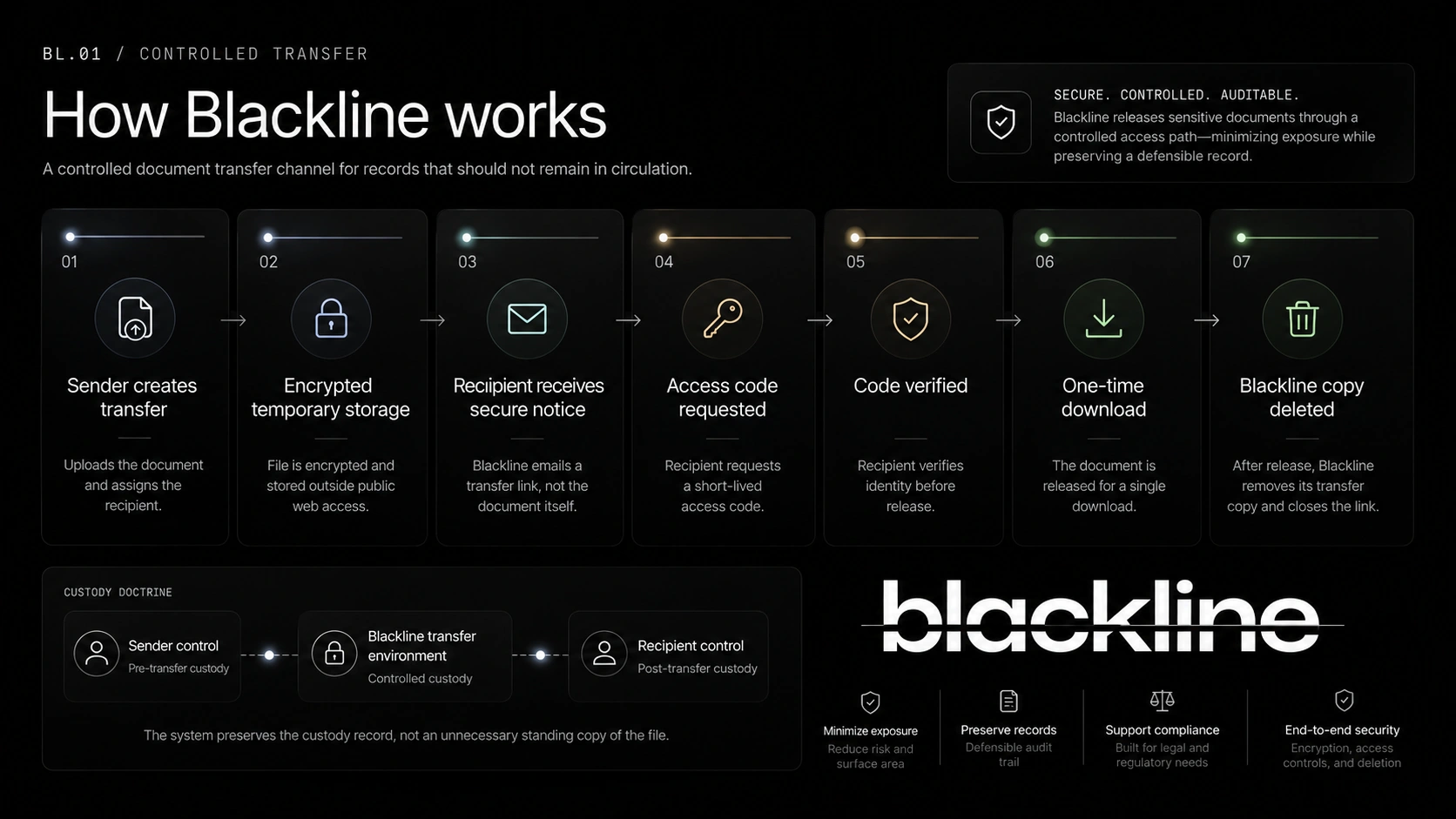
A document intake process, for example, should not require an improvised emergency procedure if a secure, authorized alternate submission path could reasonably have been established beforehand. Nor does continuity require standing up an entirely new application whenever a primary platform becomes unavailable. Sometimes the most effective alternative is a simpler mechanism that preserves identity, authorization, document integrity, receipt records, handling requirements, and accountability.
The objective is not technological complexity. It is the preservation of function.
The strongest continuity mechanism is often the one that was authorized, understood, and ready before anyone needed it.
A research application: Mission-Prioritized Intelligence Delivery
The same principle informs Aerellus's ongoing research into Mission-Prioritized Intelligence Delivery (MPID). The research addresses a different technical problem, but one governed by the same underlying discipline: supporting infrastructure must not become confused with the mission objective.
In conventional information environments, greater transmission capacity often produces greater volumes of available data. But more information does not automatically create better decisions. Under constrained communications, that distinction becomes especially important.
When a connection degrades, attempting to transmit everything equally may prevent the most consequential information from arriving when it is needed. MPID examines a mission-governed alternative.
The proposed framework evaluates information according to its relevance to an authorized mission, time sensitivity, evidentiary standing, required context, and delivery feasibility. Under constrained conditions, the objective is to deliver the smallest sufficient package of mission-critical information first, without omitting context necessary for its responsible interpretation. Supporting information may follow as capacity permits.
When communications are entirely unavailable, the system cannot manufacture connectivity. It must instead preserve an intelligible local state, identify the limitations of available information, and prepare authorized updates for eventual reconciliation.
The research does not presume that communications will remain available. It does not presume that every disruption can be predicted. And it does not treat information volume as a substitute for decision advantage.
Information Dominance is not more information. It is better information.
MPID remains a proposed research framework requiring validation, not a claim of demonstrated operational capability. Its relevance here is the engineering approach: establish what matters, preserve integrity, recognize changing constraints, and adapt delivery without transferring decision authority to the supporting technology. The same discipline that governs the prioritization of intelligence under degraded connectivity can inform the design of entirely different operational systems.
The mechanism changes. The principle remains.
Related research — WP-006
Mission-Prioritized Intelligence Delivery
Applied intelligence research examining decision advantage, information integrity, and delivery continuity under changing operational conditions.
Mission Primacy is not an emergency procedure
There is a fundamental difference between an architecture designed to preserve mission objectives and one that attempts to recover them after an interruption. The former begins with the objective. The latter often begins with the platform.
When supporting infrastructure becomes the primary organizing principle of a system, continuity is frequently reduced to a secondary engineering requirement. Alternate pathways are added later. Exceptions are documented after a failure. Recovery procedures are developed around dependencies that have already become deeply embedded.
These measures may improve an existing system, sometimes substantially. But they do not necessarily correct the architectural decisions that made the system dependent upon a single implementation in the first place.
Mission Primacy demands a different sequence.
First establish the objective, the responsible authority, and the essential operational functions. Then determine the infrastructure, interfaces, services, and dependencies required to support them. Finally, challenge the assumptions on which those supporting mechanisms depend.
- What happens when connectivity disappears?
- What happens when a trusted service becomes unavailable?
- What happens when information cannot be independently verified?
- What happens when capacity falls below what the original design expected?
- What remains possible when the preferred operating environment no longer exists?
These questions belong at the beginning of engineering, not at the end of implementation. The answers may require architectural independence, graceful degradation, alternative execution paths, explicit operational authority, local persistence, or mechanisms for reconciliation after conditions improve.
They also require discipline. Mission Primacy does not authorize the abandonment of security, evidentiary integrity, established authority, or legitimate procedural obligations in pursuit of speed. Preserving the mission includes preserving the conditions under which its execution remains trustworthy.
Speed without integrity is not an operational advantage. Continuity without authorization is not resilience. And an alternate route that compromises the objective it was intended to preserve is not a successful alternative.
The responsibility beneath the architecture
The most consequential decisions in a system's lifecycle are often made long before the system is operational. They emerge in requirements discussions, architectural assumptions, procurement choices, deployment constraints, and decisions about which dependencies are acceptable.
At the time, those decisions may appear technical or administrative. Their consequences may not.
A dependency accepted for convenience can later determine whether an essential function remains available. A recovery procedure deferred until another development phase can become an operational limitation. A schedule adjustment considered minor can consume time that cannot necessarily be recovered downstream.
None of this means every delay is avoidable, every system must remain available, or every original schedule should prevail regardless of circumstances. It means that decisions affecting operational continuity deserve to be evaluated against the purpose of the work—not only the convenience of the process supporting it.
A mature system recognizes the difference between the two. A mature organization does the same.
The question following a disruption should not end with whether the system was restored, the deadline was extended, or the administrative process resumed. It should also examine whether the essential objective could have continued, what prevented it from doing so, and whether that dependency was necessary. Those answers should influence the next architecture, not simply close the current incident.
The mission remains
Seven days may be an administrative adjustment. They may also represent an interval during which a valuable capability remains unavailable, a decision proceeds with less information, or an operational opportunity passes.
The actual consequence cannot always be known in advance. That is not a reason to ignore it. It is a reason to design with greater discipline.
We cannot guarantee stable conditions. We cannot predict every disruption. We cannot remove uncertainty from the environments in which high-consequence systems must operate. But we can refuse to make stability a prerequisite for preserving essential functions.
We can separate the objective from its implementation. We can establish authorized alternatives before they are urgently required. And we can treat time, integrity, and continuity as operational responsibilities rather than secondary characteristics of the technology.
The objective is not to build systems that never encounter failure. It is to build systems whose essential functions do not depend upon the absence of failure.
Because when the infrastructure fails, the mission does not automatically cease to exist.
Mission Primacy cannot be appended.
It must be present from the beginning.