
Get Started
[A/C-1/SDK / Controlled Service Access]

Call the capability. Keep the environment.

The integration boundary

Your system remains the system. Aerellus supplies the capability.

Command-1 does not require control of the full environment in order to contribute capability to it. Call one entitled service or coordinate several. Keep the application, workflow, data structure, and operating surface already in place.

What the SDK is

A supported interface into Command-1.

Command-1 is the command architecture. Its API defines the service interface. The SDK provides supported client tooling for approved integrations. Events return meaningful changes to the calling system, while the developer console governs credentials, environments, and entitlements.

Use a real service

The SDK does not reproduce OVRSYT features as a separate product. It calls the same underlying Aerellus services the platform itself is built to use.

Preserve the environment

Integrate capability without replacing the client application, identity model, workflow, data structure, or user surface around it.

Receive the movement

Service responses and entitled events return state changes to the calling system so the surrounding operation remains informed.

Hold the boundary

Credentials, service entitlements, roles, deployment scope, and audit context restrict the integration to what has been approved.

Service call architecture

One request. A controlled path through the service layer.

OVRSYT and approved external systems enter through the same command architecture. The calling surface may differ; the requirements for authentication, authorization, service execution, and returned state do not.

01

Authenticate

The calling system establishes identity through approved credentials tied to an organization, environment, and deployment boundary.

02

Authorize

Command-1 evaluates service entitlement, requested scope, role context, and the operation the caller is permitted to perform.

03

Execute

The requested Aerellus service performs its function and returns a defined result without exposing unrelated platform capability.

04

Notify

Entitled events, status changes, and audit context move back to the calling environment so the integration remains operationally complete.

Service families

Call one capability or coordinate several.

Service availability is determined by use case, environment, and entitlement. An integration receives the capability it requires, the credentials needed to call it, and the events necessary to keep the surrounding system current.

Layer / 01

Identity

Place an existing backend behind Aerellus authentication, session, authorization, deployment-validation, and security-event services.

Layer / 02

Scope

Create, retrieve, and act on structured work objects without deploying the complete OVRSYT workspace around them.

Layer / 03

Blackline

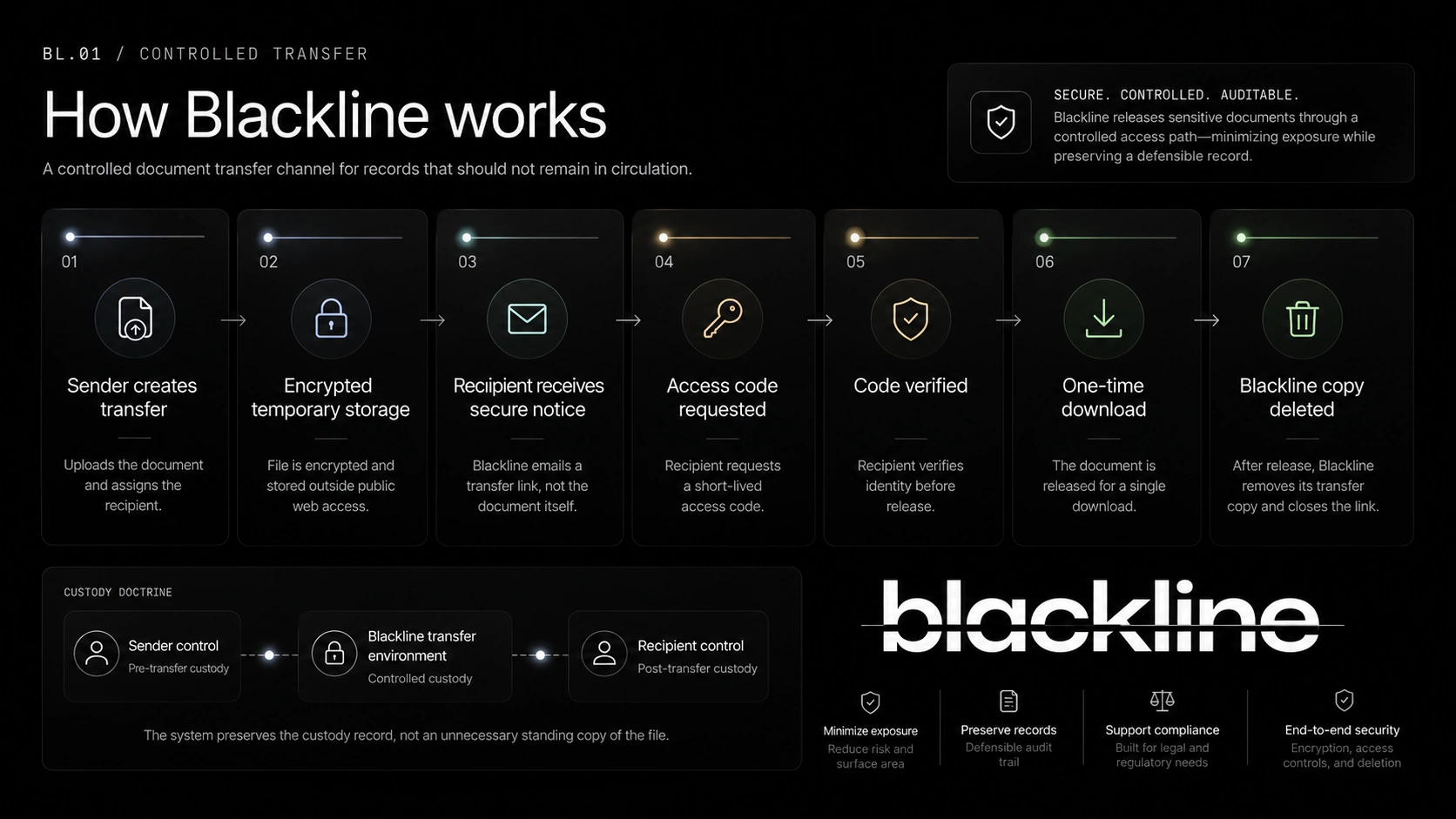
Initiate controlled transfers and receive custody, challenge, release, expiration, and removal events inside an existing workflow.

Layer / 04

KADENCE

Introduce scheduling, availability, deadline, and operational-event functions without replacing the system that owns the workflow.

Layer / 05

Threshold

Establish controlled live sessions from another operating surface while preserving the approved participant and deployment boundary.

Layer / 06

Relay

Move communication through an existing system while keeping the exchange connected to its operational and authorization context.

Developer portal

Developer access lives behind review.

The Command-1 developer portal is the entry point for API documentation, SDK resources, event definitions, integration guidance, credentials, and approved environment access. What a developer can see and call follows the services entitled to the integration.

developers.command.aerellus.com controlled access
Status

Command-1 service access for approved integrations.

Access

Scoped by organization, environment, credentials, and service entitlement.

Purpose

Call Aerellus capability from OVRSYT or an established external system.

Path

API, SDK, events, credentials, environment configuration, and logs.

Open developer portal >
Integration posture

Built for systems that already exist.

Command-1 is most consequential where an organization already has a substantial environment and needs Aerellus at one precise boundary. The sophistication of the existing system is not an obstacle. It is often the reason selective service access is the correct path.

Existing platforms

Established applications that need one Aerellus capability without surrendering their user surface, data model, or workflow.

Private environments

Controlled deployments that require exact service boundaries, scoped credentials, and organization-specific implementation.

OVRSYT deployments

Custom OVRSYT compositions that use Command-1 to select, configure, and coordinate the services required by the operation.

Focused capability

Teams that can define the exact service, system boundary, users, events, and operational result the integration must support.

Controlled access

Precise interoperability begins with a precise boundary.

Define the calling system, required service, identity model, data posture, event behavior, and deployment environment. Aerellus uses that boundary to determine credentials, entitlements, documentation, and the appropriate integration path.

developers.command.aerellus.com >
Aerellus / Insights

Latest Briefings

Recent articles on systems, platforms, digital infrastructure, and operational control.

The Cost of Fragmented Operations

The Cost of Fragmented Operations

Organizations rarely lose control all at once. Control erodes when work moves across disconnected systems, forcing teams to rebuild context, repeat movement, and defend records that were never structured cleanly in the first place.

Read Briefing →

The System Behind the Work

The System Behind the Work

Most operational drag is not caused by lack of effort. It comes from scattered information, disconnected tools, unclear ownership, and workflows that depend too heavily on memory. Strong infrastructure gives the organization a working surface it can trust.

Read Briefing →
Engage

Bring us the boundary, not a blank integration request.

Tell Aerellus what must remain in place, which capability the operation needs, and what should happen when the service returns. We will determine whether the correct implementation is direct API access, a supported SDK, an event connection, a composed OVRSYT deployment, or a combination.

contact@aerellus.com >