
Get Started
[A/C-1 / Service Command Architecture]

Command-1

The system beneath the system

OVRSYT is not a monolith. It is Command-1 at full depth.

Every OVRSYT deployment is assembled from Aerellus services. Command-1 is the layer that authenticates those calls, governs their boundaries, and allows the same capabilities to operate together inside OVRSYT or selectively inside another system.

The architecture

One service architecture. Two integration paths.

Deploy OVRSYT when the operation needs a complete environment ready to move. Use Command-1 selectively when an established system needs one Aerellus capability without replacing the architecture around it. Both paths execute against the same underlying services.

Native composition

OVRSYT uses Command-1 to call Aerellus services as one coordinated operating environment. The platform is assembled from the same service boundaries available for controlled integration.

Deployment-specific stack

A legal team and an investment firm do not receive the same package with renamed fields. Aerellus composes the services each operation requires and leaves unnecessary ones outside the deployment.

Selective service access

An existing application can call Identity, Blackline, KADENCE, Scope, Relay, Threshold, or another entitled service without adopting the full OVRSYT operating surface.

Controlled execution

Authentication, permissions, entitlements, deployment context, and event handling remain governed at the Aerellus layer regardless of where the service is consumed.

Command sequence

The application is not the architecture. The services are.

A login surface, matter view, schedule, transfer, message, or live session is an implementation of an Aerellus service. Command-1 governs how that service is requested, authorized, executed, and returned to the system that called it.

01

Request

OVRSYT or an approved external system calls a defined Aerellus service against a specific deployment and operating context.

02

Authorize

Command-1 validates identity, entitlement, scope, permission, and the boundary within which the requested capability may operate.

03

Execute

The service performs its function without requiring the calling system to absorb the rest of OVRSYT or reproduce the architecture behind it.

04

Return

State, results, events, and audit context return to the calling environment so the service remains part of the operation around it.

Aerellus service layer

Services composed for OVRSYT. Callable beyond it.

Command-1 is the common command structure behind the services Aerellus deploys. OVRSYT coordinates them as a complete environment. Approved systems can consume one service, or several, at the boundary the operation actually requires.

Service / 01

Identity

Authentication, session issuance, deployment validation, authorization context, and security events behind the access surface.

Service / 02

Scope

Structured work objects, relationships, status, ownership, and the operational context that organizes activity around the work.

Service / 03

Relay

Controlled communication tied to the people, records, permissions, and deployment context surrounding the exchange.

Service / 04

KADENCE

Scheduling, availability, deadlines, and operational events that can move inside OVRSYT or an established external system.

Service / 05

Blackline

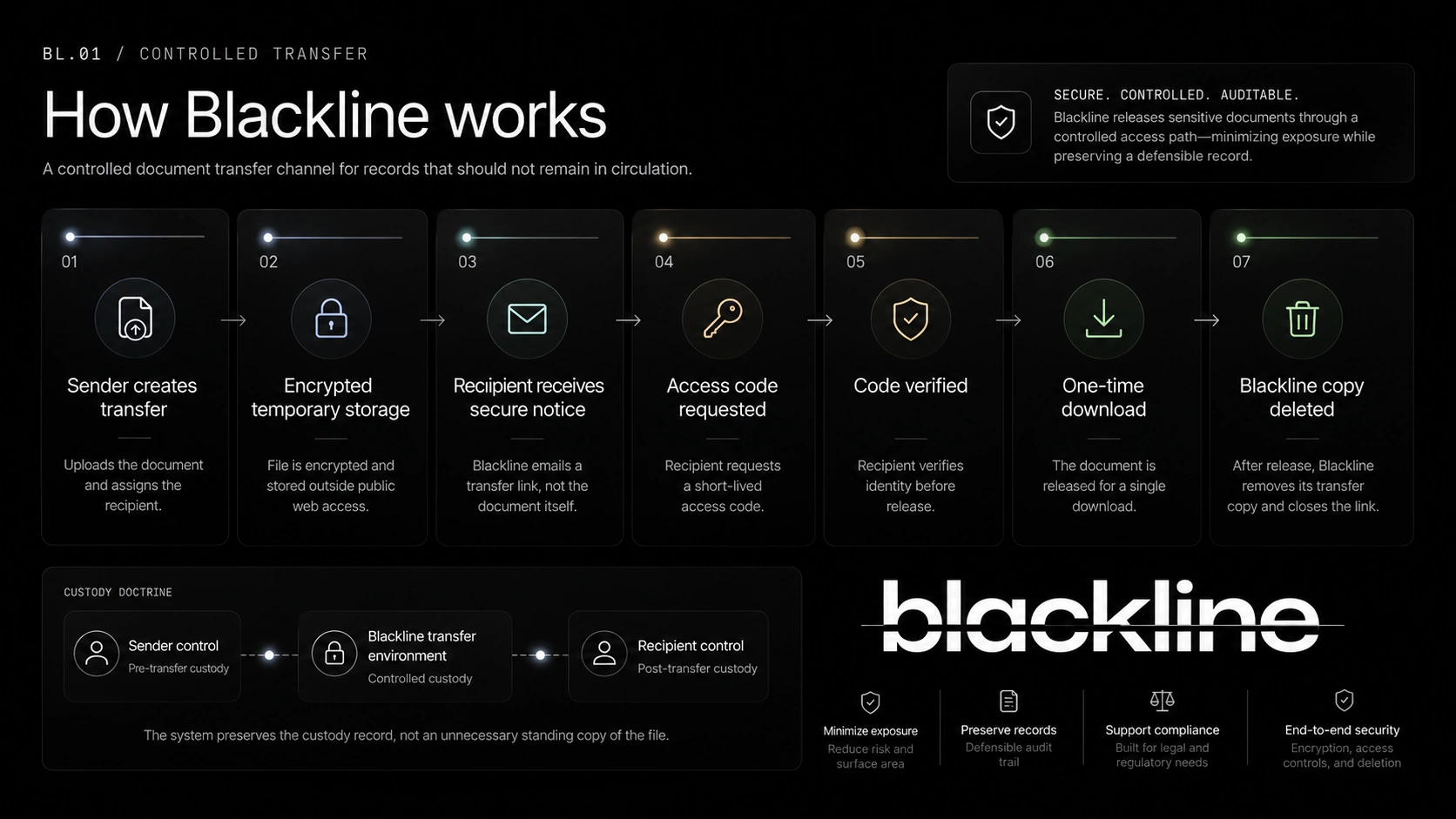
Controlled document transfer, recipient challenge, release, custody events, expiration, and removal without relocating the surrounding workflow.

Service / 06

Threshold

Controlled live-session capability that can be mounted where the operation needs direct presence without rebuilding the environment.

Why OVRSYT

The complete environment when speed matters.

Command-1 makes Aerellus services composable. OVRSYT makes them ready. Identity, records, communication, scheduling, files, events, audit, and the operating surface arrive already coordinated around the deployment. The organization can begin with a complete system instead of engineering the stack service by service.

Complete operating surface Ready deployment
Services already orchestrated Native composition
Stack selected by mission Deployment fit
Faster path into operation Immediate movement
Deployment boundary

The operation determines where Aerellus begins.

Some organizations need the full OVRSYT environment. Others need an OVRSYT deployment composed around a narrower service stack. Mature platforms may need only one Aerellus capability. Command-1 supports each path without forcing the same architecture onto every operation.

Deploy the system

Use OVRSYT when the organization needs the complete operating environment and wants the integration work already resolved.

Compose the deployment

Stack the Command-1 services required by the mission so the OVRSYT deployment reflects the operation rather than a fixed software bundle.

Call the capability

Introduce one or more Aerellus services into an existing system while leaving its application, data model, and operating surface in place.

Keep control precise

Scope credentials, entitlements, service access, events, and audit to the approved deployment boundary and nothing beyond it.

One architecture

Use the service. Or deploy the system.

OVRSYT is what happens when the Aerellus service layer is deployed as one operating environment. Command-1 allows those same services to operate beyond it when an existing system needs a specific capability.

Developer access

Call the capability. Keep the environment.

The SDK provides a supported path into Command-1. Approved developers can call the same Aerellus service layer used by OVRSYT, receive events back into their own systems, and preserve the architecture already in place.

Command-1 SDK reviewed access
Purpose Consume an Aerellus service without deploying the full platform.
Access model Authenticated, entitled, and scoped to an approved environment.
Developer portal APIs, SDKs, events, credentials, and integration guidance.
View Command-1 SDK >

Native to OVRSYT. Available beyond it.

Aerellus / Insights

Latest Briefings

Recent articles on systems, platforms, digital infrastructure, and operational control.

The Cost of Fragmented Operations

The Cost of Fragmented Operations

Organizations rarely lose control all at once. Control erodes when work moves across disconnected systems, forcing teams to rebuild context, repeat movement, and defend records that were never structured cleanly in the first place.

Read Briefing →

The System Behind the Work

The System Behind the Work

Most operational drag is not caused by lack of effort. It comes from scattered information, disconnected tools, unclear ownership, and workflows that depend too heavily on memory. Strong infrastructure gives the organization a working surface it can trust.

Read Briefing →
Engage

Define the integration boundary.

Begin with the operation: the complete environment it needs, the services already in place, and the capability Aerellus should provide. Aerellus will determine whether the correct path is a composed OVRSYT deployment, selective Command-1 access, or a combination of both.

contact@aerellus.com >