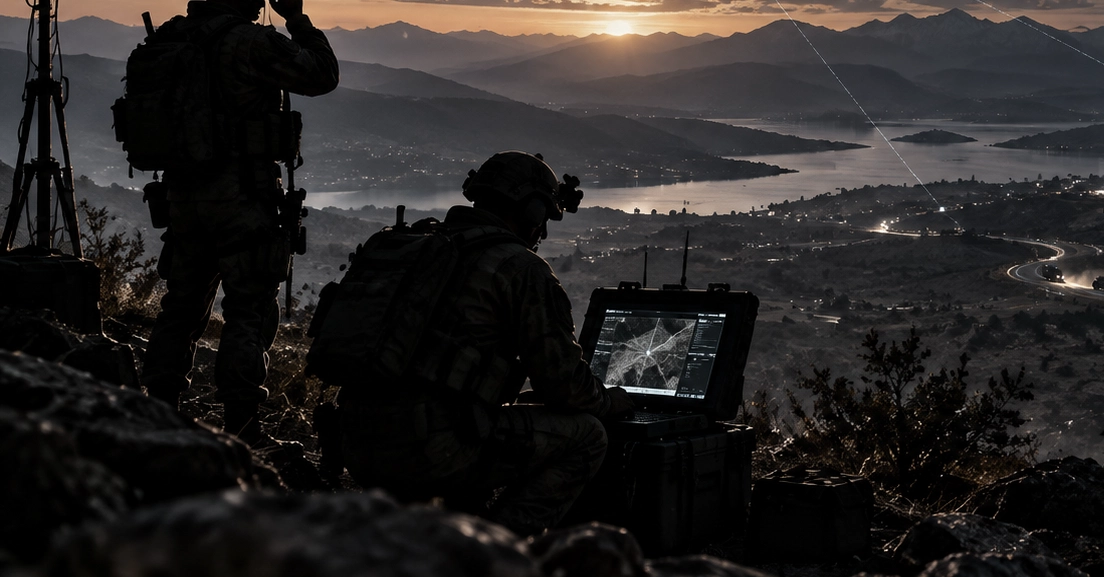
Aerellus launches OVRSYT deployment access for operational teams.

OVRSYT
Get Started

Operational Systems for Decisions that Carry Consequence.

Aerellus works from the operational problem outward: establishing what must change, what must remain accountable, and what the system needs to make possible. The engineering follows.

AERELLUS [AER.01/ OPERATIONAL SYSTEMS]

[THE REQUIREMENT PRECEDES THE ASSESSMENT]

AER.01/A /

Signals require context.

AER.01/B /

Assessment distinguishes
fact from inference.

AER.01/C /

Decision authority
remains accountable.

[AER.01/ OPERATIONAL SYSTEMS]

OVRSYT / Flagship Platform

One operating surface. Different mission profiles.

Fragmentation is not simply the inconvenience of working across multiple applications. It becomes consequential when a decision depends on information that has lost its context, when responsibility changes hands, or when the record must be reconstructed after the fact. OVRSYT is an operating environment engineered to keep the work, its participants, its information, and its decisions connected.

Operational structure

The operation has an identifiable center: its objective, participants, authority, decisions, activity, and current state. Context should travel with the work, not depend on someone remembering where to look.

Controlled information movement

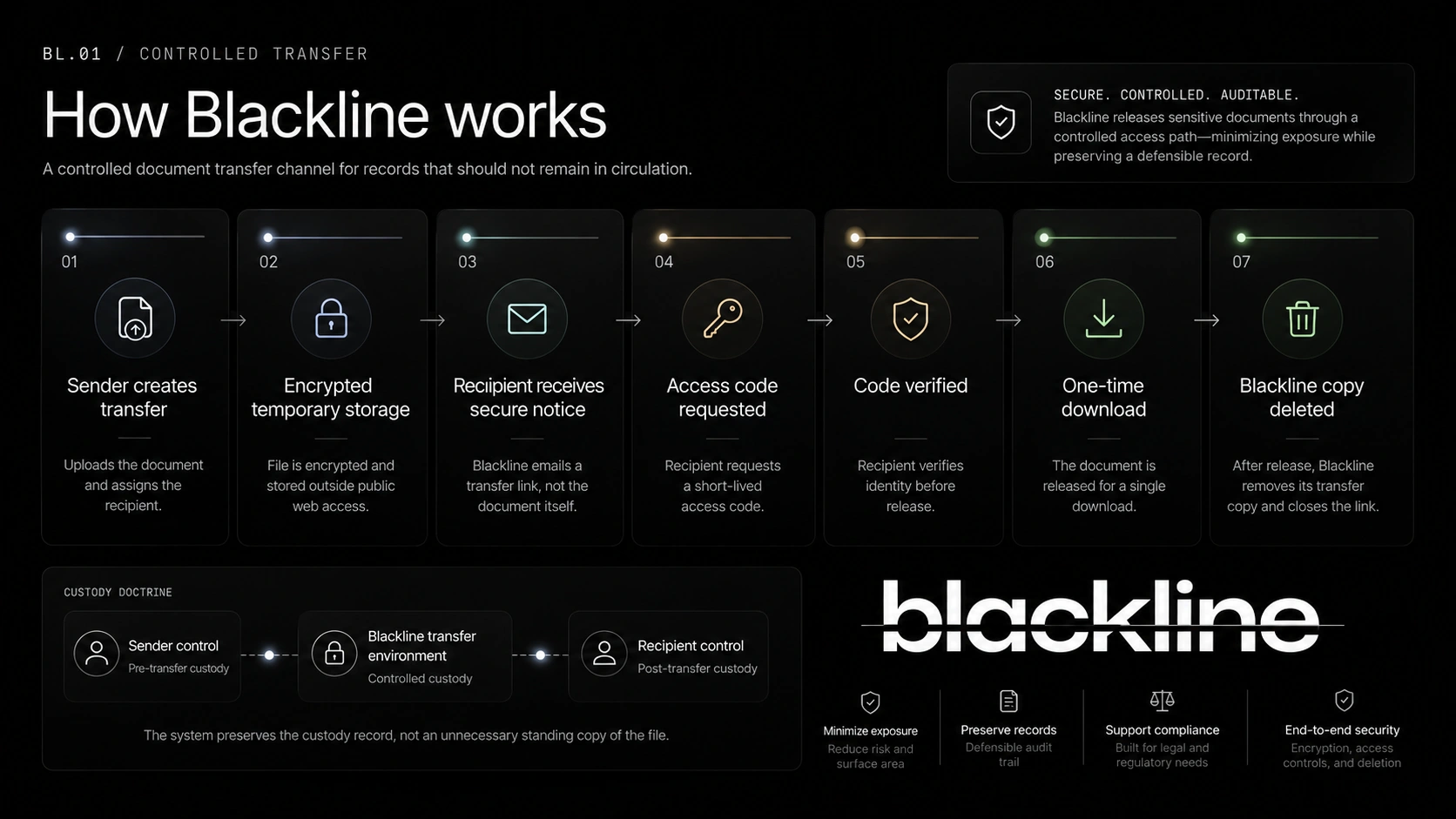
The moment information leaves one boundary for another is often where accountability is lost. Blackline addresses that transition through deliberate access, release, custody, and expiration controls.

Communications and coordination

Conversations, meetings, and instructions lose value when the next person cannot determine what was agreed, who owns the next action, or how the exchange relates to the operational record.

Operational rhythm

Schedules and assignments have operational consequences. Changes must remain visible in the context of the work they affect, rather than becoming isolated entries in another calendar.

Operating doctrine

The operation should not disappear between systems.

The most consequential failures are often found between systems, responsibilities, and assumptions. A record exists but cannot be located in time. An authorization is valid in one environment but ambiguous in another. A team can execute the workflow while losing the reasoning behind it. Aerellus begins by locating those conditions and determining what must change to prevent their recurrence.

01

Establish the operational edge

Before selecting an interface or integration, establish where the work begins, who may enter it, what must be known, and where custody or responsibility can break. Those boundaries define the engineering requirement.

02

Maintain the common operating record

The record should explain not only what happened, but the context in which a decision was made. That continuity must survive handoffs, personnel changes, and changes in operating conditions.

03

Keep authority explicit

The system must distinguish who can see information, who may change it, who can authorize action, and what evidence supports that authority. Convenience cannot silently redefine responsibility.

04

Extend without teardown

A corrected failure should not create a permanent dependency on the people who corrected it. The procedure, system behavior, and operating record should allow the organization to sustain the improvement as conditions and personnel change.

Operational Continuity

The system must hold when conditions change.

Operating environments are rarely tested under ideal conditions. Personnel change. Information arrives late or incomplete. Authority shifts. Established procedures encounter circumstances they were never designed to address.

Aerellus engineers for that reality. The objective is not simply to make a system function under expected conditions, but to preserve operational context, decision authority, and accountable execution when those conditions no longer hold.

Preserve operational context

Decisions depend on more than the information immediately visible. Systems must preserve what was known, what was assumed, what changed, and why an action was authorized, even as personnel and operating conditions change.

Maintain authority through transition

Responsibility must remain identifiable when work crosses organizational, technical, or personnel boundaries. A transition should not leave authority implied, undocumented, or dependent on institutional memory.

Accommodate changing requirements

Operational requirements evolve. Capabilities must adapt without forcing organizations to abandon established processes, compromise existing controls, or reconstruct their operating environment around every new requirement.

Sustain the correction

An engineered solution is incomplete if its effectiveness depends permanently on its original developers. Procedures, controls, records, and system behavior must allow the organization to sustain the capability independently.

The measure is not whether the system works today. It is whether the operation can depend on it tomorrow.

Explore capabilities >

[A.RD / RESEARCH & DEVELOPMENT]

The doctrine behind the systems.

Operational conditions expose problems that conventional specifications often miss. Aerellus research examines the engineering disciplines required to preserve information integrity, govern relevance, maintain decision authority, and sustain operational judgment as people, systems, and conditions change.

See All
Capability layer

Start with the failure. Engineer the correction.

A system can perform exactly as specified and still fail the operation it was built to support. Aerellus begins by establishing where the failure occurs, what conditions allow it to persist, and what must change to prevent its recurrence. That discipline applies whether we are engineering the solution or working alongside an established development team.

Diagnose the operating condition

Separate the visible failure from its underlying cause. Examine where information loses context, authority becomes ambiguous, workflows break under changing conditions, or operators are forced to compensate for limitations in the systems supporting them.

Establish the engineering requirement

Translate operational findings into defined system behavior, decision boundaries, interfaces, controls, and measurable acceptance criteria. The solution may require new architecture, changes to an existing environment, or no new software at all.

Validate the correction

Evaluate the response against the conditions that exposed the original problem. Verify that it remains effective through handoffs, personnel changes, incomplete information, and shifting requirements— without permanent dependence on the team that engineered it.

Explore capabilities >
Engagement Model

The engagement follows the requirement.

Not every operational problem requires a new platform, another development team, or a complete system replacement. Some require a better diagnosis. Others require a different architecture, a focused correction, or engineering carried through implementation. Aerellus enters where its judgment and capabilities can make the greatest difference.

Operational assessment

Examine the operating environment, established procedures, information dependencies, and points of failure. Determine whether the stated requirement addresses the underlying problem or only its visible symptoms.

Solution architecture

Establish the operating model, engineering requirements, system boundaries, and acceptance criteria. Work alongside an existing technical team to ensure implementation decisions remain aligned with operational reality.

Engineering & integration

Develop a focused capability, correct an existing workflow, integrate established systems, or engineer a complete operating environment when the requirement justifies it. The implementation is determined by the problem.

Operational transition

Carry the correction beyond technical delivery. Support validation, establish procedures, transfer operational knowledge, and resolve gaps exposed as the solution enters use. The objective is capability the organization can sustain independently.

Operational range

Different missions. Same operating doctrine.

Aerellus deployments demonstrate the same architecture across materially different operating environments. The mission changes. The doctrine does not: defined authority, controlled information movement, common operational context, modular capability, and infrastructure designed to extend.

Investigative operations

Archer Knox uses OVRSYT to support sensitive investigative work, controlled records, external access, coordination, reporting, and operational visibility inside one governed environment.

Mission-driven operations

ONEKID Foundation applies the same architecture to programs, personnel, volunteers, records, communications, administration, and controlled workflows under a very different mission profile.

One architecture, different profiles

The operating model is not tied to one industry. Services, permissions, workflows, interfaces, and deployment boundaries are composed around the work being performed.

Built to evolve

New workflows, users, integrations, services, and operational requirements can be introduced without abandoning the architecture already in place.

Aerellus / Insights

Latest Briefings

Recent articles on operational software, information control, systems integration, mission execution, and the doctrine behind controlled environments.

The Requirement Is Moving

The Requirement Is Moving

Technology is no longer waiting for traditional acquisition cycles. As software, AI, sensing, communications, and autonomous systems evolve faster, organizations need a faster path from requirement to operational capability—without sacrificing control, security, or discipline.

Read Briefing →

The Cost of Fragmented Operations

The Cost of Fragmented Operations

Organizations rarely lose control all at once. Control erodes when work moves across disconnected systems, forcing teams to rebuild context, repeat movement, and defend records that were never structured cleanly in the first place.

Read Briefing →
Engage

Bring the problem before the prescription

Bring the operating problem—even if a solution is already underway. Aerellus can help establish what is failing, challenge assumptions in the proposed response, define the architecture, or work alongside the team responsible for implementation. The measure is whether the resulting capability holds up when the work is underway and the original experts are no longer in the room.

contact@aerellus.com >