Get Started

[A.CA / OPERATING DOCTRINE / 001]

Mission
Primacy.

The mission establishes the requirement. Technology is selected, designed, or rejected according to its ability to serve that requirement.

Aerellus / Governing doctrineApplies across assessment, architecture, engineering, and transition
Conceptual progression from observation through relevance and decision evaluation toward an operational objective.

Mission Primacy

01 / The governing position

The requirement comes before the solution.

An organization may arrive with a requested platform, an integration plan, or a list of features. Those requests matter, but they are not necessarily the operational requirement.

Aerellus begins by establishing what the operation is meant to accomplish, where it is failing, who carries authority, and what must remain dependable when conditions change. Only then can the engineering response be justified.

Mission Primacy is the standing rule behind that approach. It is not tied to one product, client, operating environment, or implementation method.

01.A / DEFINE

Find the actual constraint.

Distinguish the observed problem from the preferred remedy. Establish objectives, responsibilities, dependencies, and the conditions under which the operation must succeed.

01.B / DECIDE

Do not mistake capability for necessity.

A new tool, additional data, or more automation is not inherently an improvement. A simpler procedure, a narrower integration, or retention of an established system may better serve the mission.

01.C / ENGINEER

Make the requirement govern the system.

Architecture, access, information movement, interfaces, and execution controls should reflect operational authority and the consequences of failure—not merely what the technology permits.

01.D / VERIFY

Test the operation, not just the feature.

The measure is whether the correction survives handoffs, imperfect information, changing personnel, constrained conditions, and the absence of the original implementation team.

[A.CA / MISSION PRIMACY / APPLICATION]

Discipline between
requirement and action.

Mission Primacy is not a preference for a particular technology or architecture. It is a governing discipline: establish what the operation requires, determine what the evidence supports, and preserve the authority necessary to act.

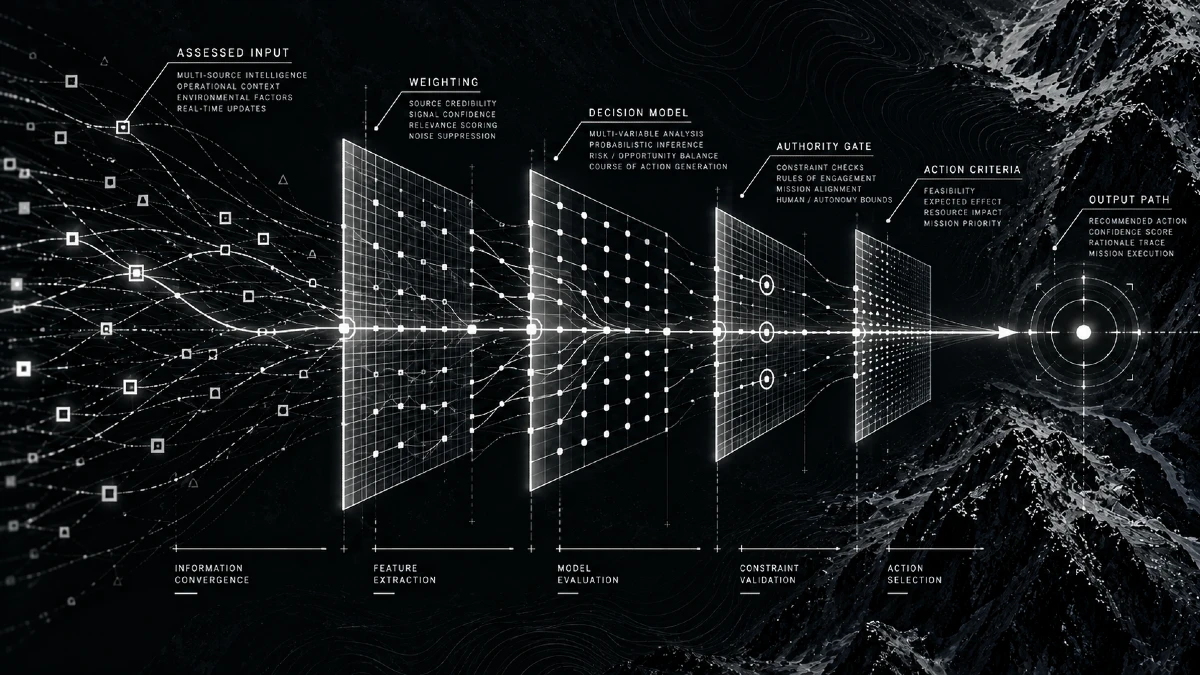
Conceptual decision architecture showing information assessment, evaluation, authority controls, and an output path.
FIG. 01 Information / Assessment / Authority

02 / DECISION DISCIPLINE

Capability must remain accountable to the requirement.

A system can process information correctly and still produce an operationally unjustified recommendation. Technical confidence does not establish mission relevance, and relevance does not independently authorize action.

Aerellus approaches architecture by identifying these boundaries before selecting the technology that will operate within them.

GOVERNING DISTINCTION What a system can determine is not necessarily what the operation should do.
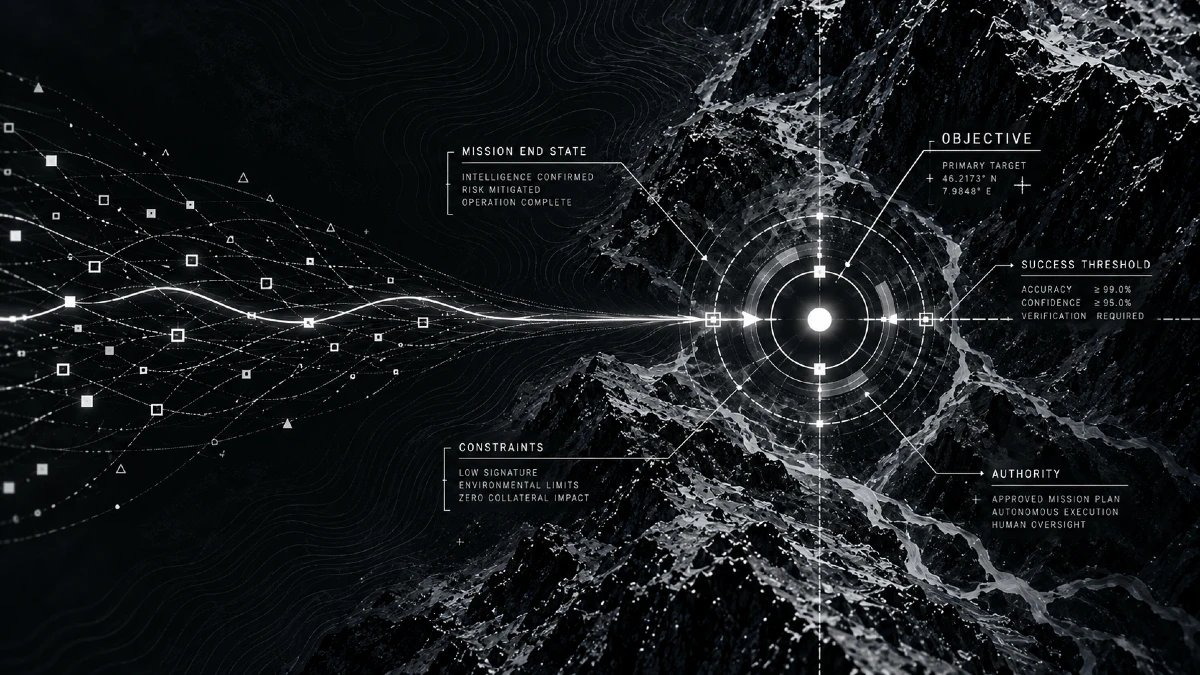
Conceptual mission objective with operational constraints, success criteria, and defined authority.
FIG. 02 Objective / Constraints / End State

03 / MISSION OBJECTIVE

The objective governs the engineering.

Every engagement begins with the operational condition that must change. Success is not measured by the number of features delivered, systems connected, or records collected.

It is measured against the defined requirement: what must become possible, what must remain controlled, what constraints cannot be violated, and how the resulting capability will be sustained.

GOVERNING DISTINCTION The objective is not the technology being delivered. It is the condition the technology must help achieve.

04 / What this commits Aerellus to

Judgment before implementation.

We can recommend not building.

Where a procedural correction or an existing capability resolves the operational failure with less risk, a new platform is not the preferred answer by default.

We preserve the distinction between information and authority.

The ability to observe, calculate, correlate, or recommend does not itself authorize action. Systems must keep responsibility attributable.

We allow the mission picture to change.

Mission discipline is not blindness. Unexpected evidence, critical exceptions, and changing circumstances must be able to challenge assumptions and trigger authorized reassessment.

We design for continuity after delivery.

A correction is incomplete if the organization cannot understand, operate, and sustain it without the people who first engineered it.

05 / Doctrine and research

The principle remains. Its technical expressions are tested.

Mission Primacy governs Aerellus engagements broadly. Its application to operational information systems raises more specific questions: when should an observation receive attention, when does an assessment warrant tasking, and how should software preserve the limits of what is known?

WP-001 examines those questions through proposed information objects, system requirements, safeguards, and comparative validation. It is a research discussion draft, not a claim of completed or proven automation.

Read WP-001 / Mission Primacy

Bring the mission. Challenge the presumed solution.

Aerellus can enter at assessment, architecture, implementation, or operational transition. The starting obligation does not change: establish what the mission requires before prescribing how to deliver it.

Engage Aerellus